Prescription GLP-1 medications have changed the conversation around obesity, type 2 diabetes and metabolic health. Many patients have also discovered that gaining affordable access can be difficult.
The price a patient pays can vary dramatically based on the medication, dosage, insurance plan, eligibility for savings programs and where the prescription is filled.
So why can these medications cost so much? The answer involves much more than the contents of an injection pen.
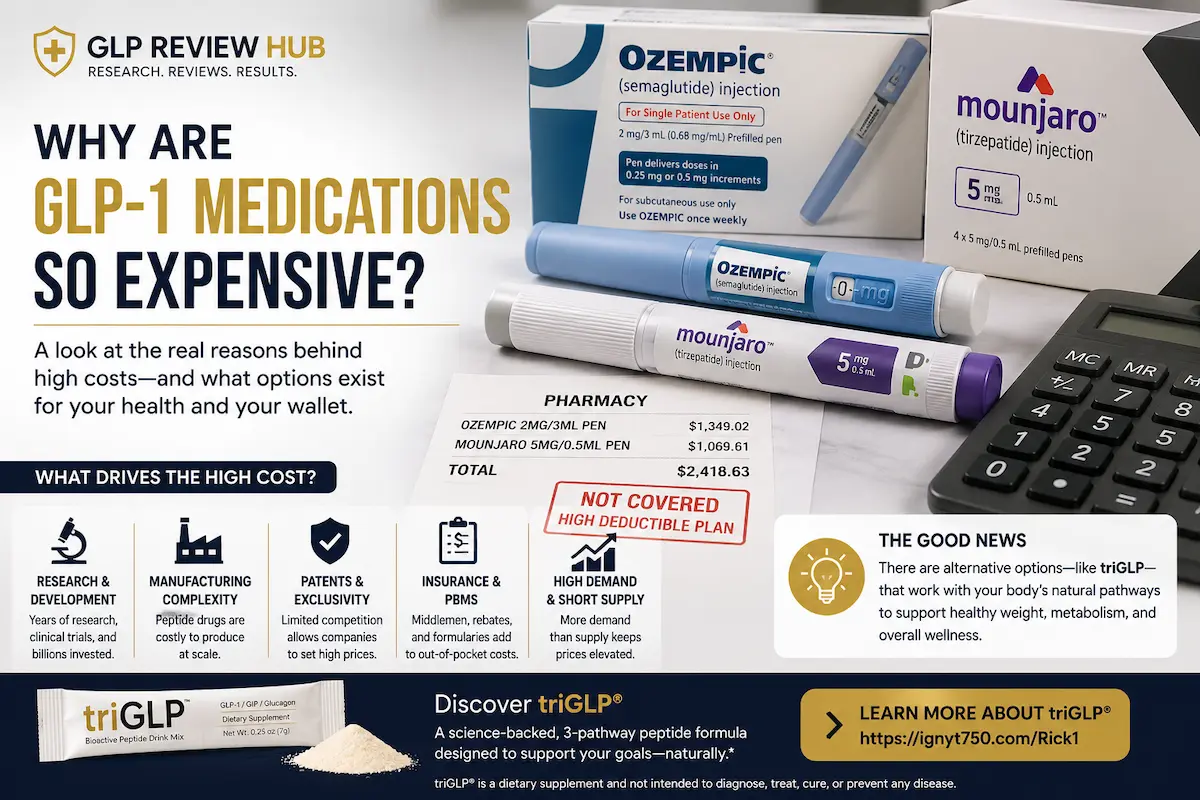
1. Research and development require major investment
Developing a prescription medication can take many years. Researchers must identify promising compounds, study how they behave, evaluate dosing and complete multiple stages of clinical testing.
Before a product reaches patients, expenses may include:
- Laboratory and preclinical research
- Multiple phases of human clinical trials
- Regulatory submissions and review
- Manufacturing validation
- Quality-control systems
- Post-approval safety monitoring
Many experimental drug candidates never receive approval. Manufacturers generally price successful products partly to recover the expense and risk associated with the entire development process.
2. Peptide medications are complex to manufacture
GLP-1 medicines are not produced in the same way as a simple conventional tablet. Peptide-based medications may require specialized facilities, carefully controlled production environments, purification, sterile filling and extensive quality testing.
Injectable products may also involve:
- Specialized pens or delivery devices
- Sterile components and packaging
- Temperature-controlled handling
- Strict batch testing
- Distribution through regulated supply chains
Each step adds cost before the prescription reaches a pharmacy.
3. Patent protection limits direct competition
Patents and other forms of regulatory exclusivity can prevent direct generic competition for a period of time. That protected period allows a manufacturer to market its product without an identical low-cost generic alternative immediately entering the market.
Competition can eventually place downward pressure on prices, but the process may take years and can depend on patents, litigation, regulatory approvals and manufacturing capacity.
4. Insurance coverage can be complicated
Having health insurance does not automatically mean every GLP-1 prescription will be covered. Formularies and eligibility rules vary substantially among employers, insurers and government programs.
Some patients may encounter:
- Prior-authorization requirements
- Diagnosis or eligibility restrictions
- Step-therapy requirements
- High deductibles
- Copays or coinsurance
- Coverage that differs by medical indication
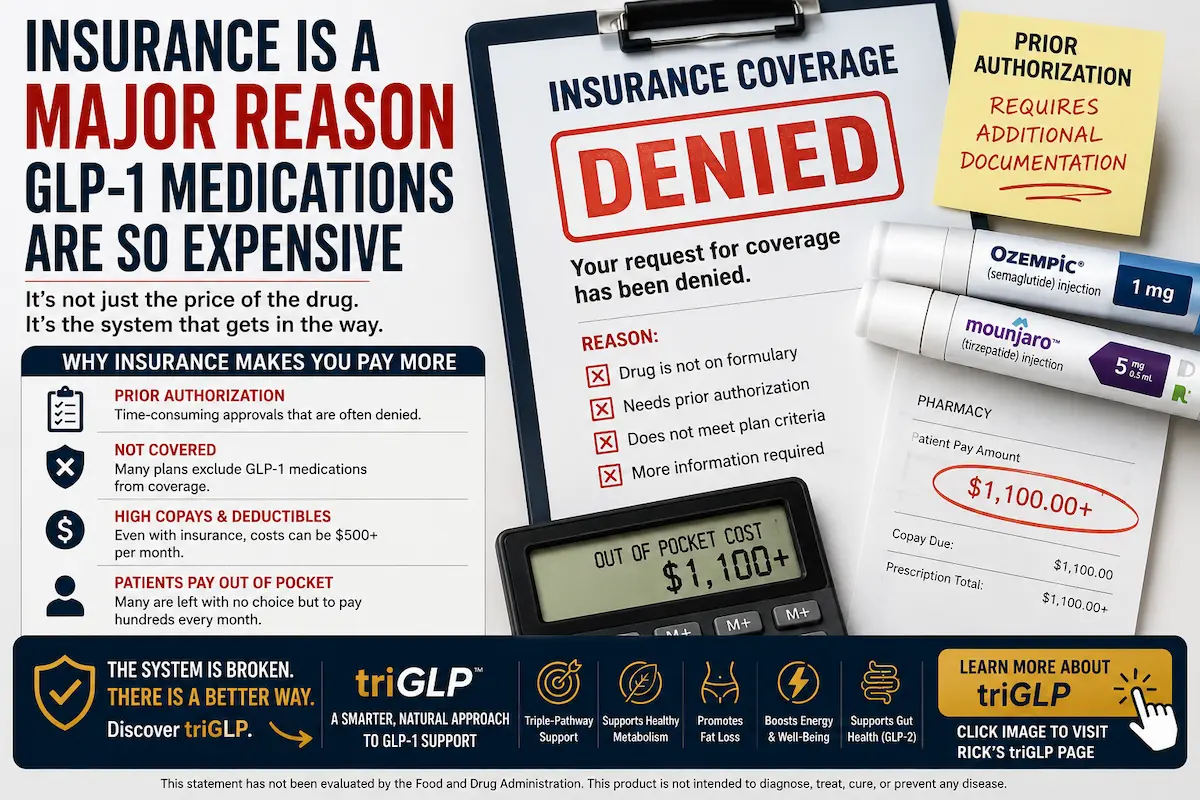
Pharmacy benefit managers, commonly called PBMs, may also participate in negotiations among drug manufacturers, health plans and pharmacies. The final amount paid by a patient may therefore look very different from a medication's published list price.
5. Demand has grown rapidly
Public interest in GLP-1 medications has expanded rapidly. Manufacturers have invested in additional production capacity, but local or temporary availability problems may still occur as products move through the supply chain.
Strong demand does not by itself explain the full price, but it can affect availability, fulfillment and how quickly additional production reaches patients.
6. List price is not always the patient's final price
A published list price is not necessarily what every patient pays. The real cost may be affected by insurance benefits, deductibles, pharmacy pricing, manufacturer savings offers, government-program rules and direct-pay options.
Current manufacturer programs may offer reduced self-pay pricing or savings for eligible patients, but those programs can change. Readers should verify current details directly with the manufacturer, pharmacy and insurance provider.
7. What about non-prescription alternatives?
People researching the cost of prescription injections often begin looking at non-prescription products as well. These products should not be represented as equivalent replacements for an FDA-approved prescription medication.
One product readers may encounter is triGLP , a non-prescription nutritional product. It is not Ozempic, Wegovy, Mounjaro, Zepbound or a generic version of those medications.
Anyone considering changing or stopping a prescribed medication should speak with a qualified healthcare professional first.
Curious About triGLP?
Review the product information, ingredients and purchase options directly through Rick's triGLP page.
Explore triGLP →The bottom line
Prescription GLP-1 costs are influenced by a combination of research expenses, specialized manufacturing, patent protection, insurance rules, negotiated pricing and strong demand.
- Long and expensive medication development
- Complex peptide and injectable manufacturing
- Limited direct competition during patent protection
- Insurance and prior-authorization rules
- Deductibles, copays and coinsurance
- Rapidly growing demand
Patients should compare current coverage, pharmacy prices, manufacturer programs and medically appropriate options with their healthcare provider.
Readers researching non-prescription nutritional support can learn more about triGLP here .
Frequently Asked Questions
Why are GLP-1 medications so expensive?
Prices reflect research and development, specialized manufacturing, patent protection, insurance rules, negotiated pricing and strong demand.
Does insurance cover GLP-1 medications?
Coverage depends on the insurance plan, diagnosis and medical indication. Prior authorization and cost-sharing requirements are common.
Will GLP-1 prices eventually decrease?
Prices may change as new competitors enter the market, manufacturing expands and patent protections eventually expire. Individual costs will still depend on insurance and available savings programs.
Is triGLP the same as a prescription GLP-1 medication?
No. triGLP is a non-prescription nutritional product. It is not Ozempic, Wegovy, Mounjaro, Zepbound or a generic version of those medications.