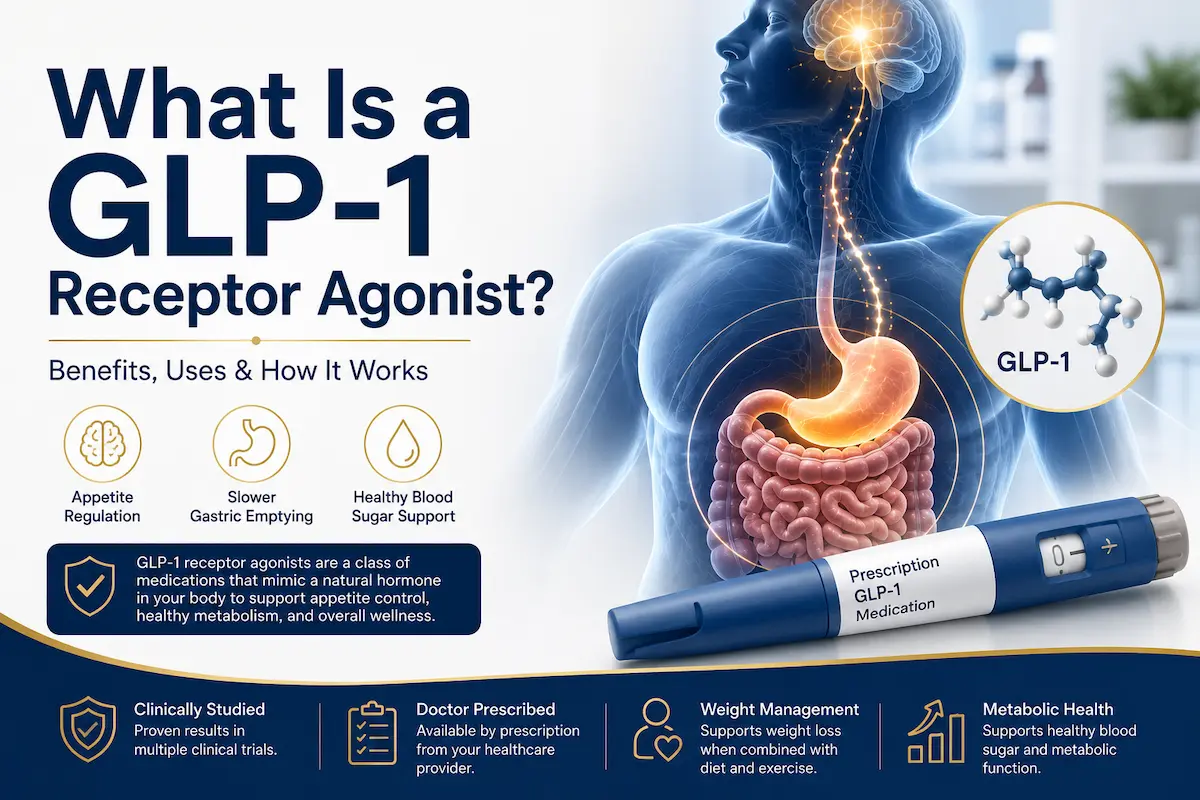
If you have researched Ozempic, Wegovy, Saxenda or Victoza, you have probably encountered the phrase GLP-1 receptor agonist. The name sounds technical, but the basic idea is simple: these medicines activate receptors involved in blood sugar regulation, appetite and digestion.
What does GLP-1 mean?
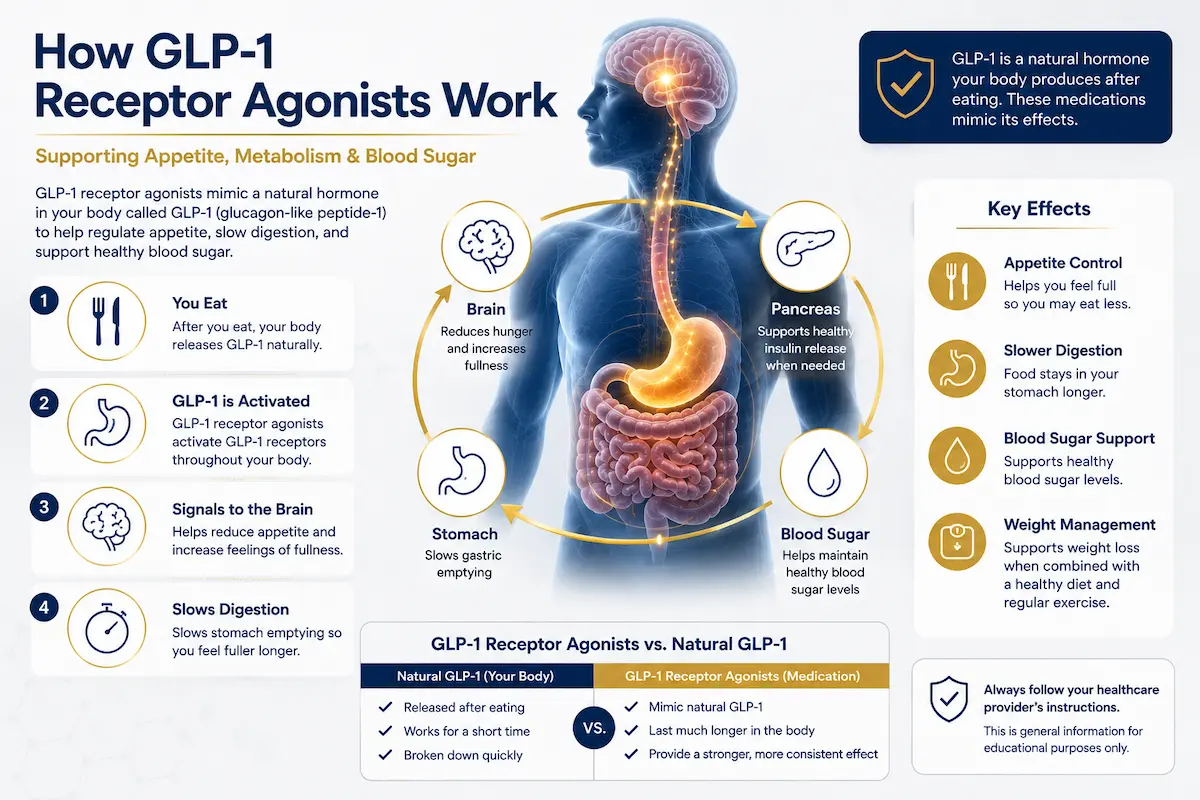
GLP-1 stands for glucagon-like peptide-1. It is a naturally occurring hormone released by the intestine after eating. Its effects help the body respond to food by supporting glucose-dependent insulin secretion and influencing appetite-related pathways in the brain.
GLP-1 activity supports insulin release when blood glucose is elevated.
It acts in areas involved in appetite, food intake and feelings of fullness.
Many GLP-1 medicines slow gastric emptying, especially during treatment initiation and dose changes.
How do GLP-1 receptor agonists work?
An agonist activates a receptor. A GLP-1 receptor agonist is therefore a medicine designed to activate GLP-1 receptors and reproduce some of the hormone’s natural effects for longer than the body’s own rapidly broken-down GLP-1.
The active ingredient stimulates the same receptor used by the body’s natural GLP-1 hormone.
This can improve post-meal and fasting blood glucose in people with type 2 diabetes.
GLP-1 activity in the brain can reduce hunger and increase feelings of fullness.
Delayed gastric emptying can contribute to fullness but may also contribute to digestive side effects.
Common GLP-1 receptor agonists
Brand names can be confusing because the same active ingredient may be sold under different names for different approved uses.
| Active ingredient | Well-known brands | Classification |
|---|---|---|
| Semaglutide | Ozempic, Wegovy, Rybelsus | GLP-1 receptor agonist |
| Liraglutide | Victoza, Saxenda | GLP-1 receptor agonist |
| Dulaglutide | Trulicity | GLP-1 receptor agonist |
| Exenatide | Byetta and related approved products | GLP-1 receptor agonist |
| Tirzepatide | Mounjaro, Zepbound | Dual GIP and GLP-1 receptor agonist |
GLP-1 receptor agonist versus dual GIP/GLP-1 agonist
Traditional GLP-1 receptor agonists primarily target the GLP-1 receptor. Tirzepatide targets both the GIP and GLP-1 receptors, which is why Mounjaro and Zepbound are more precisely described as dual agonists.
What are GLP-1 receptor agonists used for?
Approved uses depend on the exact medication and product label. Several are approved to improve glycemic control in people with type 2 diabetes. Certain products are approved for chronic weight management, while some have additional cardiovascular or kidney-related indications for specific populations.
Several products improve glycemic control when used according to their approved labeling.
Certain products are approved for eligible patients alongside nutrition and activity changes.
Some products have specific cardiovascular, kidney or other approved indications.
Why can GLP-1 medicines support weight loss?
Weight-management effects are generally connected to reduced appetite, increased satiety and lower food intake. These medicines are not simply “fat burners”; they change biological signals involved in hunger, fullness and glucose regulation.
Learn more in our guide to what can happen after stopping GLP-1 medications.
Common side effects and precautions
Digestive symptoms are among the most commonly discussed effects.
- Nausea
- Vomiting
- Diarrhea
- Constipation
- Abdominal discomfort
- Reduced appetite
Are GLP-1 receptor agonists always injections?
No. Many are injected, but oral semaglutide products are also available for certain approved uses. Route, timing and administration instructions vary by product.
Prescription GLP-1 medicines versus dietary supplements
FDA-approved GLP-1 receptor agonists are prescription medicines reviewed for specific indications, dosing, safety and effectiveness. Dietary supplements are regulated differently and are not GLP-1 receptor agonist drugs.
| Feature | Prescription GLP-1 medicine | Dietary supplement |
|---|---|---|
| Product type | Prescription drug | Dietary supplement |
| GLP-1 receptor agonist | Yes, for GLP-1-only medicines | No |
| FDA approval as a drug | Yes, for specific labeled uses | No |
| Prescription required | Yes | Generally no |
Where triGLP fits—and where it does not
Ignyt triGLP is marketed as a dietary supplement for people interested in non-prescription wellness and weight-management support. It is not semaglutide, tirzepatide or an FDA-approved GLP-1 receptor agonist.
Its lower price and non-injection format may interest people comparing convenience and cost, but it should not be presented as medically equivalent to prescription treatment.
Read the complete triGLP review →Questions to ask a healthcare professional
- Which medication is approved for my condition?
- What benefits are realistic for me?
- Which side effects require immediate attention?
- How will the dose be increased or adjusted?
- Could this medicine interact with my current treatment?
- What happens if I eventually stop treatment?
For affordability information, see our guides to getting GLP-1 medication without insurance and legitimate ways to reduce GLP-1 costs.
Frequently asked questions
Is Ozempic a GLP-1 receptor agonist?
Is Wegovy a GLP-1 receptor agonist?
Are Mounjaro and Zepbound GLP-1 medicines?
Do GLP-1 receptor agonists require a prescription?
Can triGLP replace a prescription GLP-1 medicine?
Related GLP-1 guides
Understand the category before comparing products
Knowing the difference between GLP-1 receptor agonists, dual agonists and dietary supplements makes every medication, insurance and cost comparison easier to understand.